The dynamic knowledge repository (DKR) is a concept developed by Douglas C. Engelbart as a primary strategic focus for allowing humans to address complex problems. He has proposed that a DKR will enable us to develop a collective IQ greater than any individual's IQ. References and discussion of Engelbart's DKR concept are available at the Doug Engelbart Institute. == Definition == A knowledge repository is a computerized system that systematically captures, organizes and categorizes an organization's knowledge. The repository can be searched and data can be quickly retrieved. The effective knowledge repositories include factual, conceptual, procedural and meta-cognitive techniques. The key features of knowledge repositories include communication forums. A knowledge repository can take many forms to "contain" the knowledge it holds. A customer database is a knowledge repository of customer information and insights – or electronic explicit knowledge. A Library is a knowledge repository of books – physical explicit knowledge. A community of experts is a knowledge repository of tacit knowledge or experience. The nature of the repository only changes to contain/manage the type of knowledge it holds. A repository (as opposed to an archive) is designed to get knowledge out. It should therefore have some rules of structure, classification, taxonomy, record management, etc., to facilitate user engagement.
Situated
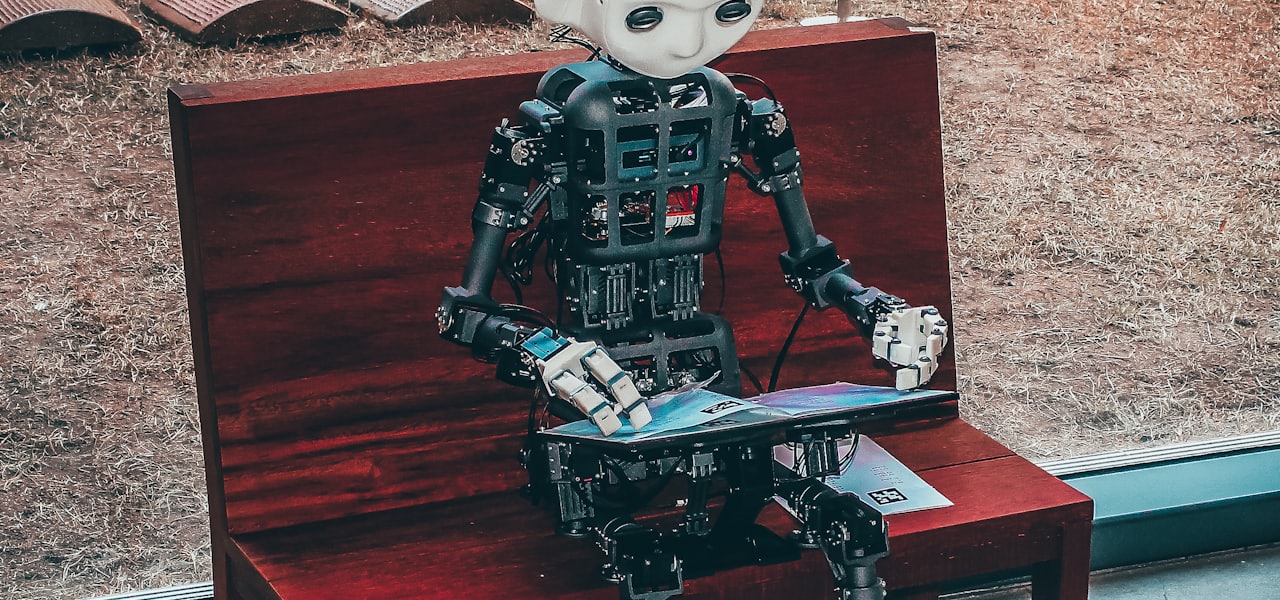
In artificial intelligence and cognitive science, the term situated refers to an agent which is embedded in an environment. The term situated is commonly used to refer to robots, but some researchers argue that software agents can also be situated if: they exist in a dynamic (rapidly changing) environment, which they can manipulate or change through their actions, and which they can sense or perceive. Examples might include web-based agents, which can alter data or trigger processes (such as purchases) over the internet, or virtual-reality bots which inhabit and change virtual worlds, such as Second Life. Being situated is generally considered to be part of being embodied, but it is useful to consider each perspective individually. The situated perspective emphasizes that intelligent behaviour derives from the environment and the agent's interactions with it. The nature of these interactions are defined by an agent's embodiment.
Cache language model
A cache language model is a type of statistical language model. These occur in the natural language processing subfield of computer science and assign probabilities to given sequences of words by means of a probability distribution. Statistical language models are key components of speech recognition systems and of many machine translation systems: they tell such systems which possible output word sequences are probable and which are improbable. The particular characteristic of a cache language model is that it contains a cache component and assigns relatively high probabilities to words or word sequences that occur elsewhere in a given text. The primary, but by no means sole, use of cache language models is in speech recognition systems. To understand why it is a good idea for a statistical language model to contain a cache component one might consider someone who is dictating a letter about elephants to a speech recognition system. Standard (non-cache) N-gram language models will assign a very low probability to the word "elephant" because it is a very rare word in English. If the speech recognition system does not contain a cache component, the person dictating the letter may be annoyed: each time the word "elephant" is spoken another sequence of words with a higher probability according to the N-gram language model may be recognized (e.g., "tell a plan"). These erroneous sequences will have to be deleted manually and replaced in the text by "elephant" each time "elephant" is spoken. If the system has a cache language model, "elephant" will still probably be misrecognized the first time it is spoken and will have to be entered into the text manually; however, from this point on the system is aware that "elephant" is likely to occur again – the estimated probability of occurrence of "elephant" has been increased, making it more likely that if it is spoken it will be recognized correctly. Once "elephant" has occurred several times, the system is likely to recognize it correctly every time it is spoken until the letter has been completely dictated. This increase in the probability assigned to the occurrence of "elephant" is an example of a consequence of machine learning and more specifically of pattern recognition. There exist variants of the cache language model in which not only single words but also multi-word sequences that have occurred previously are assigned higher probabilities (e.g., if "San Francisco" occurred near the beginning of the text subsequent instances of it would be assigned a higher probability). The cache language model was first proposed in a paper published in 1990, after which the IBM speech-recognition group experimented with the concept. The group found that implementation of a form of cache language model yielded a 24% drop in word-error rates once the first few hundred words of a document had been dictated. A detailed survey of language modeling techniques concluded that the cache language model was one of the few new language modeling techniques that yielded improvements over the standard N-gram approach: "Our caching results show that caching is by far the most useful technique for perplexity reduction at small and medium training data sizes". The development of the cache language model has generated considerable interest among those concerned with computational linguistics in general and statistical natural language processing in particular: recently, there has been interest in applying the cache language model in the field of statistical machine translation. The success of the cache language model in improving word prediction rests on the human tendency to use words in a "bursty" fashion: when one is discussing a certain topic in a certain context, the frequency with which one uses certain words will be quite different from their frequencies when one is discussing other topics in other contexts. The traditional N-gram language models, which rely entirely on information from a very small number (four, three, or two) of words preceding the word to which a probability is to be assigned, do not adequately model this "burstiness". Recently, the cache language model concept – originally conceived for the N-gram statistical language model paradigm – has been adapted for use in the neural paradigm. For instance, recent work on continuous cache language models in the recurrent neural network (RNN) setting has applied the cache concept to much larger contexts than before, yielding significant reductions in perplexity. Another recent line of research involves incorporating a cache component in a feed-forward neural language model (FN-LM) to achieve rapid domain adaptation.
Image moment
In image processing, computer vision and related fields, an image moment is a certain particular weighted average (moment) of the image pixels' intensities, or a function of such moments, usually chosen to have some attractive property or interpretation. Image moments are useful to describe objects after segmentation. Simple properties of the image which are found via image moments include area (or total intensity), its centroid, and information about its orientation. == Raw moments == For a 2D continuous function f(x,y) the moment (sometimes called "raw moment") of order (p + q) is defined as M p q = ∫ − ∞ ∞ ∫ − ∞ ∞ x p y q f ( x , y ) d x d y {\displaystyle M_{pq}=\int \limits _{-\infty }^{\infty }\int \limits _{-\infty }^{\infty }x^{p}y^{q}f(x,y)\,dx\,dy} for p,q = 0,1,2,... Adapting this to scalar (grayscale) image with pixel intensities I(x,y), raw image moments Mij are calculated by M i j = ∑ x ∑ y x i y j I ( x , y ) {\displaystyle M_{ij}=\sum _{x}\sum _{y}x^{i}y^{j}I(x,y)\,\!} In some cases, this may be calculated by considering the image as a probability density function, i.e., by dividing the above by ∑ x ∑ y I ( x , y ) {\displaystyle \sum _{x}\sum _{y}I(x,y)\,\!} A uniqueness theorem states that if f(x,y) is piecewise continuous and has nonzero values only in a finite part of the xy plane, moments of all orders exist, and the moment sequence (Mpq) is uniquely determined by f(x,y). Conversely, (Mpq) uniquely determines f(x,y). In practice, the image is summarized with functions of a few lower order moments. === Examples === Simple image properties derived via raw moments include: Area (for binary images) or sum of grey level (for greytone images): M 00 {\displaystyle M_{00}} Centroid: { x ¯ , y ¯ } = { M 10 M 00 , M 01 M 00 } {\displaystyle \{{\bar {x}},\ {\bar {y}}\}=\left\{{\frac {M_{10}}{M_{00}}},{\frac {M_{01}}{M_{00}}}\right\}} == Central moments == Central moments are defined as μ p q = ∫ − ∞ ∞ ∫ − ∞ ∞ ( x − x ¯ ) p ( y − y ¯ ) q f ( x , y ) d x d y {\displaystyle \mu _{pq}=\int \limits _{-\infty }^{\infty }\int \limits _{-\infty }^{\infty }(x-{\bar {x}})^{p}(y-{\bar {y}})^{q}f(x,y)\,dx\,dy} where x ¯ = M 10 M 00 {\displaystyle {\bar {x}}={\frac {M_{10}}{M_{00}}}} and y ¯ = M 01 M 00 {\displaystyle {\bar {y}}={\frac {M_{01}}{M_{00}}}} are the components of the centroid. If ƒ(x, y) is a digital image, then the previous equation becomes μ p q = ∑ x ∑ y ( x − x ¯ ) p ( y − y ¯ ) q f ( x , y ) {\displaystyle \mu _{pq}=\sum _{x}\sum _{y}(x-{\bar {x}})^{p}(y-{\bar {y}})^{q}f(x,y)} The central moments of order up to 3 are: μ 00 = M 00 , μ 01 = 0 , μ 10 = 0 , μ 11 = M 11 − x ¯ M 01 = M 11 − y ¯ M 10 , μ 20 = M 20 − x ¯ M 10 , μ 02 = M 02 − y ¯ M 01 , μ 21 = M 21 − 2 x ¯ M 11 − y ¯ M 20 + 2 x ¯ 2 M 01 , μ 12 = M 12 − 2 y ¯ M 11 − x ¯ M 02 + 2 y ¯ 2 M 10 , μ 30 = M 30 − 3 x ¯ M 20 + 2 x ¯ 2 M 10 , μ 03 = M 03 − 3 y ¯ M 02 + 2 y ¯ 2 M 01 . {\displaystyle {\begin{aligned}\mu _{00}&=M_{00},&\mu _{01}&=0,\\\mu _{10}&=0,&\mu _{11}&=M_{11}-{\bar {x}}M_{01}=M_{11}-{\bar {y}}M_{10},\\\mu _{20}&=M_{20}-{\bar {x}}M_{10},&\mu _{02}&=M_{02}-{\bar {y}}M_{01},\\\mu _{21}&=M_{21}-2{\bar {x}}M_{11}-{\bar {y}}M_{20}+2{\bar {x}}^{2}M_{01},&\mu _{12}&=M_{12}-2{\bar {y}}M_{11}-{\bar {x}}M_{02}+2{\bar {y}}^{2}M_{10},\\\mu _{30}&=M_{30}-3{\bar {x}}M_{20}+2{\bar {x}}^{2}M_{10},&\mu _{03}&=M_{03}-3{\bar {y}}M_{02}+2{\bar {y}}^{2}M_{01}.\end{aligned}}} It can be shown that: μ p q = ∑ m p ∑ n q ( p m ) ( q n ) ( − x ¯ ) ( p − m ) ( − y ¯ ) ( q − n ) M m n {\displaystyle \mu _{pq}=\sum _{m}^{p}\sum _{n}^{q}{p \choose m}{q \choose n}(-{\bar {x}})^{(p-m)}(-{\bar {y}})^{(q-n)}M_{mn}} Central moments are translational invariant. === Examples === Information about image orientation can be derived by first using the second order central moments to construct a covariance matrix. μ 20 ′ = μ 20 / μ 00 = M 20 / M 00 − x ¯ 2 μ 02 ′ = μ 02 / μ 00 = M 02 / M 00 − y ¯ 2 μ 11 ′ = μ 11 / μ 00 = M 11 / M 00 − x ¯ y ¯ {\displaystyle {\begin{aligned}\mu '_{20}&=\mu _{20}/\mu _{00}=M_{20}/M_{00}-{\bar {x}}^{2}\\\mu '_{02}&=\mu _{02}/\mu _{00}=M_{02}/M_{00}-{\bar {y}}^{2}\\\mu '_{11}&=\mu _{11}/\mu _{00}=M_{11}/M_{00}-{\bar {x}}{\bar {y}}\end{aligned}}} The covariance matrix of the image I ( x , y ) {\displaystyle I(x,y)} is now cov [ I ( x , y ) ] = [ μ 20 ′ μ 11 ′ μ 11 ′ μ 02 ′ ] . {\displaystyle \operatorname {cov} [I(x,y)]={\begin{bmatrix}\mu '_{20}&\mu '_{11}\\\mu '_{11}&\mu '_{02}\end{bmatrix}}.} The eigenvectors of this matrix correspond to the major and minor axes of the image intensity, so the orientation can thus be extracted from the angle of the eigenvector associated with the largest eigenvalue towards the axis closest to this eigenvector. It can be shown that this angle Θ is given by the following formula: Θ = 1 2 arctan ( 2 μ 11 ′ μ 20 ′ − μ 02 ′ ) {\displaystyle \Theta ={\frac {1}{2}}\arctan \left({\frac {2\mu '_{11}}{\mu '_{20}-\mu '_{02}}}\right)} The above formula holds as long as: μ 20 ′ − μ 02 ′ ≠ 0 {\displaystyle \mu '_{20}-\mu '_{02}\neq 0} The eigenvalues of the covariance matrix can easily be shown to be λ i = μ 20 ′ + μ 02 ′ 2 ± 4 μ ′ 11 2 + ( μ ′ 20 − μ ′ 02 ) 2 2 , {\displaystyle \lambda _{i}={\frac {\mu '_{20}+\mu '_{02}}{2}}\pm {\frac {\sqrt {4{\mu '}_{11}^{2}+({\mu '}_{20}-{\mu '}_{02})^{2}}}{2}},} and are proportional to the squared length of the eigenvector axes. The relative difference in magnitude of the eigenvalues are thus an indication of the eccentricity of the image, or how elongated it is. The eccentricity is 1 − λ 2 λ 1 . {\displaystyle {\sqrt {1-{\frac {\lambda _{2}}{\lambda _{1}}}}}.} == Moment invariants == Moments are well-known for their application in image analysis, since they can be used to derive invariants with respect to specific transformation classes. The term invariant moments is often abused in this context. However, while moment invariants are invariants that are formed from moments, the only moments that are invariants themselves are the central moments. Note that the invariants detailed below are exactly invariant only in the continuous domain. In a discrete domain, neither scaling nor rotation are well defined: a discrete image transformed in such a way is generally an approximation, and the transformation is not reversible. These invariants therefore are only approximately invariant when describing a shape in a discrete image. === Translation invariants === The central moments μi j of any order are, by construction, invariant with respect to translations. === Scale invariants === Invariants ηi j with respect to both translation and scale can be constructed from central moments by dividing through a properly scaled zero-th central moment: η i j = μ i j μ 00 ( 1 + i + j 2 ) {\displaystyle \eta _{ij}={\frac {\mu _{ij}}{\mu _{00}^{\left(1+{\frac {i+j}{2}}\right)}}}\,\!} where i + j ≥ 2. Note that translational invariance directly follows by only using central moments. === Rotation invariants === As shown in the work of Hu, invariants with respect to translation, scale, and rotation can be constructed: I 1 = η 20 + η 02 {\displaystyle I_{1}=\eta _{20}+\eta _{02}} I 2 = ( η 20 − η 02 ) 2 + 4 η 11 2 {\displaystyle I_{2}=(\eta _{20}-\eta _{02})^{2}+4\eta _{11}^{2}} I 3 = ( η 30 − 3 η 12 ) 2 + ( 3 η 21 − η 03 ) 2 {\displaystyle I_{3}=(\eta _{30}-3\eta _{12})^{2}+(3\eta _{21}-\eta _{03})^{2}} I 4 = ( η 30 + η 12 ) 2 + ( η 21 + η 03 ) 2 {\displaystyle I_{4}=(\eta _{30}+\eta _{12})^{2}+(\eta _{21}+\eta _{03})^{2}} I 5 = ( η 30 − 3 η 12 ) ( η 30 + η 12 ) [ ( η 30 + η 12 ) 2 − 3 ( η 21 + η 03 ) 2 ] + ( 3 η 21 − η 03 ) ( η 21 + η 03 ) [ 3 ( η 30 + η 12 ) 2 − ( η 21 + η 03 ) 2 ] {\displaystyle I_{5}=(\eta _{30}-3\eta _{12})(\eta _{30}+\eta _{12})[(\eta _{30}+\eta _{12})^{2}-3(\eta _{21}+\eta _{03})^{2}]+(3\eta _{21}-\eta _{03})(\eta _{21}+\eta _{03})[3(\eta _{30}+\eta _{12})^{2}-(\eta _{21}+\eta _{03})^{2}]} I 6 = ( η 20 − η 02 ) [ ( η 30 + η 12 ) 2 − ( η 21 + η 03 ) 2 ] + 4 η 11 ( η 30 + η 12 ) ( η 21 + η 03 ) {\displaystyle I_{6}=(\eta _{20}-\eta _{02})[(\eta _{30}+\eta _{12})^{2}-(\eta _{21}+\eta _{03})^{2}]+4\eta _{11}(\eta _{30}+\eta _{12})(\eta _{21}+\eta _{03})} I 7 = ( 3 η 21 − η 03 ) ( η 30 + η 12 ) [ ( η 30 + η 12 ) 2 − 3 ( η 21 + η 03 ) 2 ] − ( η 30 − 3 η 12 ) ( η 21 + η 03 ) [ 3 ( η 30 + η 12 ) 2 − ( η 21 + η 03 ) 2 ] . {\displaystyle I_{7}=(3\eta _{21}-\eta _{03})(\eta _{30}+\eta _{12})[(\eta _{30}+\eta _{12})^{2}-3(\eta _{21}+\eta _{03})^{2}]-(\eta _{30}-3\eta _{12})(\eta _{21}+\eta _{03})[3(\eta _{30}+\eta _{12})^{2}-(\eta _{21}+\eta _{03})^{2}].} These are well-known as Hu moment invariants. The first one, I1, is analogous to the moment of inertia around the image's centroid, where the pixels' intensities are analogous to physical density. The first six, I1 ... I6, are reflection symmetric, i.e. they are unchanged if the image is changed to a mirror image. The last one, I7, is reflection antisymmetric (changes sign under reflection), which enables it to distinguish mirror images of otherwise identical im
LanguageWare
LanguageWare is a natural language processing (NLP) technology developed by IBM, which allows applications to process natural language text. It comprises a set of Java libraries that provide a range of NLP functions: language identification, text segmentation/tokenization, normalization, entity and relationship extraction, and semantic analysis and disambiguation. The analysis engine uses a finite-state machine approach at multiple levels, which aids its performance characteristics while maintaining a reasonably small footprint. The behaviour of the system is driven by a set of configurable lexico-semantic resources which describe the characteristics and domain of the processed language. A default set of resources comes as part of LanguageWare and these describe the native language characteristics, such as morphology, and the basic vocabulary for the language. Supplemental resources have been created that capture additional vocabularies, terminologies, rules and grammars, which may be generic to the language or specific to one or more domains. A set of Eclipse-based customization tooling, LanguageWare Resource Workbench, is available on IBM's alphaWorks site, and allows domain knowledge to be compiled into these resources and thereby incorporated into the analysis process. LanguageWare can be deployed as a set of UIMA-compliant annotators, Eclipse plug-ins or Web Services.
BevQ
BevQ is a queue management mobile application developed by Faircode Technologies of Kochi, Kerala. It is provided by the Kerala State Beverages Corporation under Government of Kerala. == History == This app was released together by the Government of Kerala and the Kerala State Beverages Corporation in order to implement social distancing in the liquor stores Kerala in the case of the COVID-19 pandemic in Kerala and to reduce the congestion of people. The BevQ App was released by Faircode Technologies on 27 May 2020 on the Google Play Store. In January 2021, the app was withdrawn as bars had opened. In June 2021, there was a commitment from the Kerala CM that the App will be relaunched again. It has been reported that over 132,000 new users downloaded the app in the 48 hours after the announcement. == Achievements == The BEVQ app, which works only in the state of Kerala, beat all other Indian food and drink apps in 2020 to see the highest growth in year-on-year sessions, according to the State of Mobile 2021 report by App Annie. The app even beat the likes of Domino’s, which is used all across India. Around 300 government Liquor shops and 900 private liquor shops were enlisted in the platform. More than 200 million unique users registered in the platform. About 250,000 tokens were given out a day.
Meesho
Meesho Limited (short for Meri shop, transl. My shop) is an Indian e-commerce company, headquartered in Bengaluru. Founded by Vidit Aatrey and Sanjeev Barnwal in December 2015, Meesho is an online marketplace in categories such as fashion, home and kitchen, beauty and personal care, electronics accessories, and daily use products. == History == Meesho Private Limited, formerly Fashnear Technologies Private Limited, was established by IIT Delhi graduates Vidit Aatrey and Sanjeev Barnwal in December, 2015 In 2016, the founders came up with the idea of re-establishing the platform as Meesho, one that would enable country-wide shipping for resellers with the use of social media sites as tools for marketing. In February 2019, the platform reported having around 209,000 users and about 1.2 million monthly orders, and in March 2020, it reported approximately 563,000 users and 3.1 million monthly orders. In 2021, the Meesho mobile application was ranked among the most downloaded shopping apps globally. In 2022, Meesho had about 120 million monthly users and about 910 million orders were made through the platform, with a gross merchandise value (GMV) of about $5 billion. According to report as of August 2023 Meesho delisted 42 lakh counterfeit listings and 10 lakh restricted products under its initiative Project Suraksha. During the same period, the platform blocked access for over 12,000 user accounts flagged for policy violations. The Court granted injunctive relief by directing domain registrars to suspend the infringing websites. Additionally, the Court ordered law enforcement authorities to initiate criminal investigations, freeze associated financial accounts against the identified offenders. In 2023, Meesho became the fastest shopping app to cross over 500 million downloads. In 2024, Meesho introduced Valmo, a logistics marketplace, to provide shipment services to sellers by aggregating multiple logistics providers. Meesho employs over 3,000 small businesses and 10-12 large firms for warehousing and sorting operations within its logistics framework. According to media reports, Valmo operating in approximately 15,000 pincodes in India with around 6,000 partners. It is reported to handle over 50% of Meesho's daily orders. In November 2024, Meesho introduced a generative AI-powered voice bot for customer support, managing approximately 60,000 calls daily in English and Hindi. According to media reports, the system resolves the majority of queries without human assistance, with only a small fraction of calls requiring manual intervention. According to media reports, in 2024, Meesho prevented over 22 million suspicious or potentially fraudulent transactions on its platform. The company initiated legal proceedings, resulting in the filing of twelve cases, including nine specifically targeting over forty individuals in the cities of Kolkata and Ranchi. The company filed a suit in the Delhi High Court for a permanent injunction against parties operating deceptive websites misappropriating its brand identity. Meesha went public through an initial public offering in December 2025, raising $603 million. It is listed on both the BSE and NSE. == Recognition == In 2023, Meesho was named one of the most influential companies of the year by Time (magazine).